

Key takeaway: Two reports from late October and early November point to separate changes affecting SEO measurement and advertising strategy in an AI searc.
Key Takeaway
Two reports from late October and early November point to separate changes affecting SEO measurement and advertising strategy in an AI search market. DataForSEO, Serper, and SerpApi reported problems involving Google /goto links, while OpenAI said ChatGPT’s search-like query volume is roughly one-fifth of Google’s. Neither development proves that Google search volume is falling or that AI search has replaced conventional search.
How Google redirect limits affect SEO URL checks
DataForSEO said Google may throttle the speed at which multiple result links from the same search page can be resolved. After several links are followed quickly, later requests may return a waiting page rather than the destination URL. DataForSEO reported waits of up to 120 seconds in some cases. It also said the limit is tied to the results page rather than the IP address or search query, so changing either does not directly bypass it.
The reported behavior can affect URL-level SEO and search-visibility reports. DataForSEO said its Standard Priority mode still resolves all goto URLs, although with added delay, while its High Priority and Live modes resolve about half of them. Serper described a similar limit and introduced a method for retrieving additional URLs. SerpApi recorded Google redirect links in organic results and reported that the issue was fixed on November 2 before listing another intermittent incident on November 3.
An apparent URL loss in a ranking report covering roughly October 30 onward therefore needs checking before it is treated as a ranking loss. Teams should inspect whether the stored address begins with google.com/goto, preserve the original result data, and ask the provider which request mode was used. The reports describe observations from specific SERP data providers, not a confirmed impact on every Google result or ranking platform.
What the ChatGPT comparison means for AI marketing
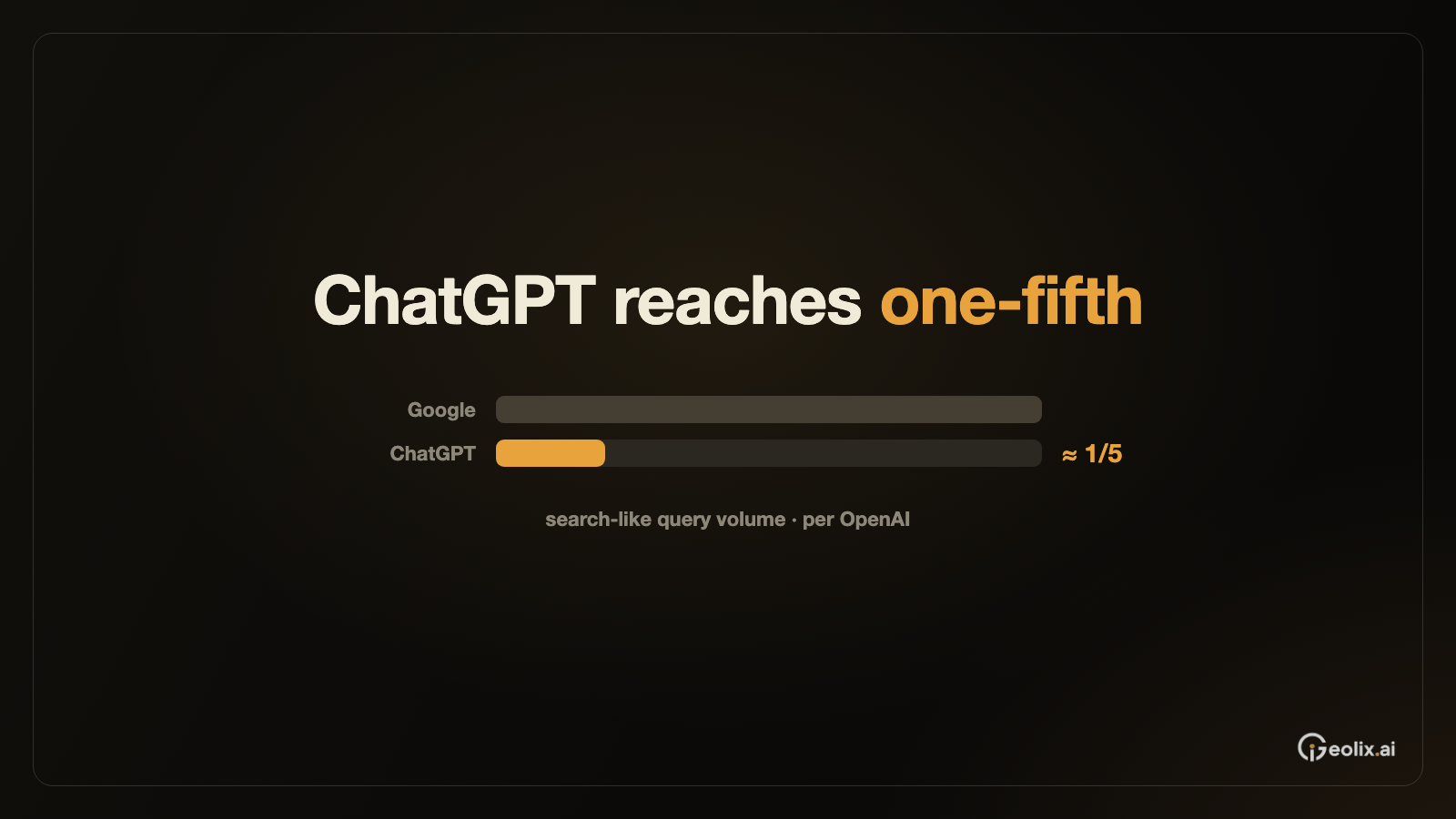
PPC Land reported that Adam Fry of OpenAI said ChatGPT’s search-like query volume is about 20% of Google’s query volume. The report says OpenAI counts questions that trigger a web search, including queries involving people, places, things, finance, and health. That definition is broader than a simple comparison of traditional search-box activity. Google has also said its own search volume is at an all-time high, so the ratio alone does not show that Google is shrinking.
For advertising and AI marketing teams, the figure is better treated as a signal about potential channel scale than as a direct budget allocation rule. PPC Land also reported that Taboola linked a 6.9% quarterly revenue decline to fewer ad impressions and factors including AI summaries. That disclosure concerns Taboola’s business and does not establish the same effect across the open web or every advertising platform. Measurement should keep Google search, AI-search citations, site visits, and conversions separate.
Method and Limitations
For SEO validation, retain the result page, destination URL, collection time, request mode, and the provider’s full response. Count Google redirect URLs separately from confirmed landing pages. For AI-search comparisons, document whether a query triggered web search and whether the compared services use equivalent definitions. The reports provide no official Google explanation for the redirect behavior and no complete public methodology for OpenAI’s ratio. These observations therefore cannot establish a change in Google market share, a universal AI-search traffic share, or a uniform advertising effect.