


Key takeaway: Google Ads is expanding lifecycle bidding across Shopping, Search, and Performance Max, with availability still rolling out.
Key Takeaway
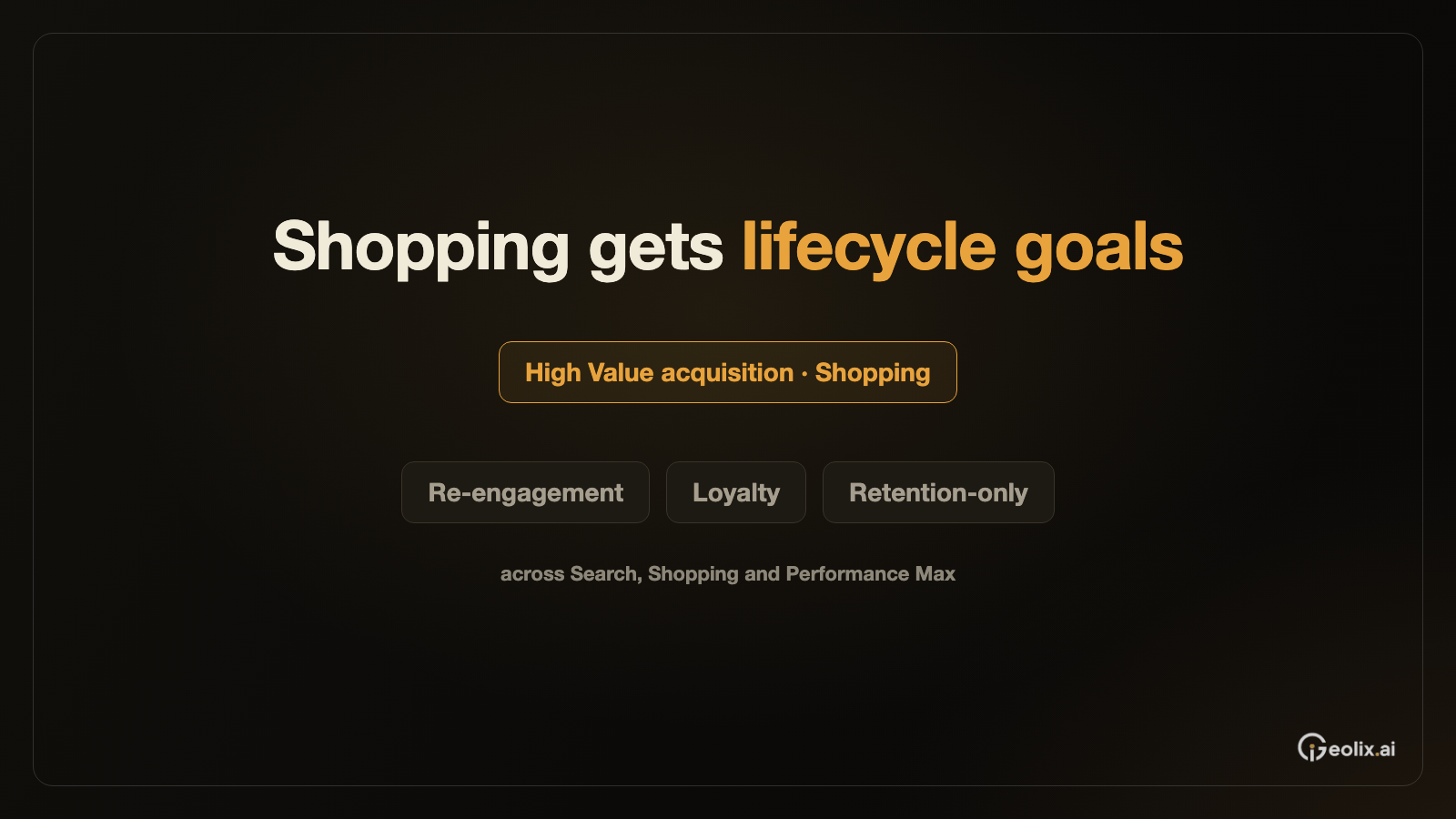
Google Ads is broadening Customer Lifecycle Optimization beyond its earlier campaign coverage. The October update adds High Value acquisition to Shopping campaigns and expands three retention modes—Re-engagement, Loyalty, and Retention-only—across Search, Shopping, and Performance Max. Google Ads liaison Ginny Marvin shared the changes on LinkedIn, while Search Engine Journal reported that the retention options are becoming more widely available after beta testing.
The change matters primarily to advertisers operating campaigns with identifiable customer segments. It does not mean every account has the same controls today. Search Engine Journal noted that Google’s support documentation has not fully caught up with the rollout and still shows some modes as limited to Performance Max or selected campaign types. Advertisers therefore need to verify availability inside their own accounts.
Which Google Ads campaigns get lifecycle controls
High Value acquisition previously applied to Search and Performance Max and is now being extended to Shopping. The setting allows advertisers to bid more for new shoppers who resemble valuable existing customers, while distinguishing high-value prospects, other new customers, and existing buyers. Google’s documentation requires value-based bidding and at least one Purchase conversion goal.
The retention options serve different operational purposes. Re-engagement prioritizes lapsed customers while continuing to reach other shoppers. Loyalty is intended for loyalty-program members and can support tailored messages or member-only offers. Retention-only restricts a campaign to the existing customer segments selected by the advertiser. A business must define “lapsed” according to its normal purchase cycle rather than applying one universal time period.
How advertisers should check setup and bidding signals
Testing begins in the Customer Lifecycle Optimization section under Goals in Google Ads. Advertisers can use Customer Match lists to identify past buyers who have gone longer than expected without purchasing, then assign the relevant lifecycle mode when it becomes available. For High Value acquisition in Shopping, the customer list deserves particular attention: a list built around repeat purchases sends Google a different signal from one built around large first orders.
Performance reviews should connect advertising spend with actual sales and margins, rather than relying only on clicks or revenue. The report recommends considering discounts and advertising costs when assessing profitability and setting additional conversion value. Purchase cycles also vary sharply by product, so a three-month inactivity rule may fit one retailer and misclassify customers for another.
Method and Limitations
Advertisers can check the Goals area for available lifecycle settings, confirm the eligible campaign type, review the Customer Match definition, and verify that a Purchase conversion goal is active. During the rollout, the account interface, documentation, and actual availability may not match. The public reporting does not establish that every advertiser has access or provide one universal completion date. The separate report about ADSQUIRE winning Search Engine Land’s PPC Agency of the Year award is not evidence that these Google Ads features produce any particular performance result.