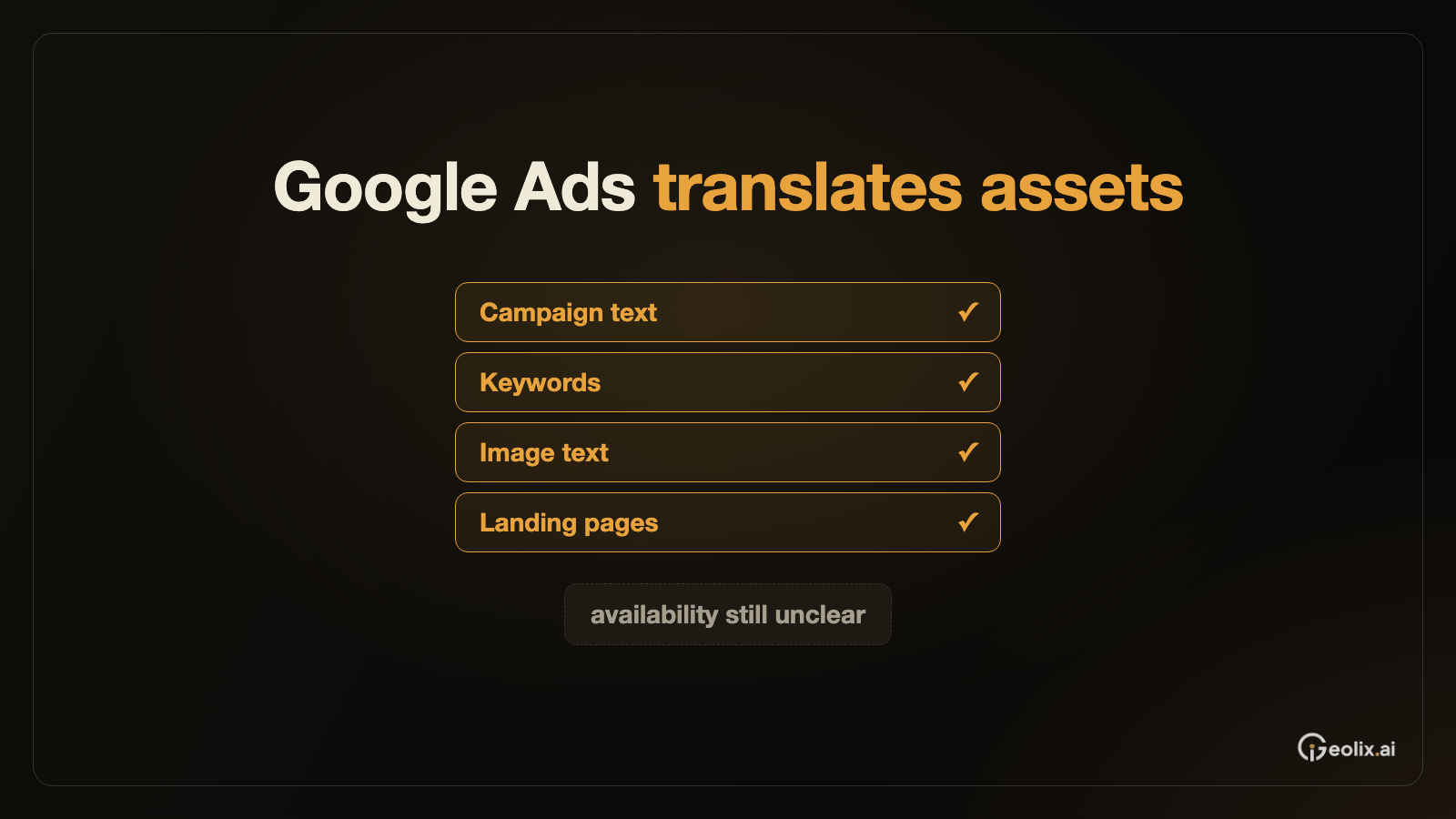

Key takeaway: Google Ads is rolling out an AI translation tool for campaign assets, keywords, images, and landing pages, with availability still unclear.
Key Takeaway
Google Ads is rolling out a Translation tool inside the advertiser console. The reported scope covers campaign text, keywords, image text, and landing-page inputs. The reports do not establish that the feature is available to every account, that translated assets are published automatically, or that it has produced a measured conversion lift.
What the Google Ads translation tool handles
Advertisers can reach the feature through Tools > Translation in the Google Ads interface. Reported text-asset support includes headlines, descriptions, sitelinks, and callouts. Keywords are also listed as a supported targeting element. For images, the tool uses AI to replace text on the image and add the translated version as an additional asset. That makes the workflow broader than translating a headline field: operators may need to review the original image, the new asset, and the surrounding campaign structure together.
Landing pages use a separate workflow. Advertisers can manually upload URLs or install a JavaScript snippet on their site. The available reporting does not explain how the tool handles dynamic page content, language-specific publishing, or whether a translated page replaces an existing destination. Those details matter for teams managing multiple markets and should not be inferred from the presence of the Translation menu.
What advertising platform operators should verify
The confirmed change is a campaign-localization function, not a documented SEO or AI-search ranking feature. Teams can use the tool as a new place to prepare multilingual assets, then check keyword meaning, message consistency, landing-page language, and image legibility before using the translated versions. Google’s interface copy says the tool is intended to help advertisers reach global customers and boost conversions, but the cited reports provide no performance study or conversion evidence.
A same-day PPC Land report separately described Google AI Overviews appearing for 88% of tracked commercial keywords in a Semrush study and cited research finding limited AI-assistant referral volume. Those findings concern search visibility and referral measurement. They do not show that Google Ads’ Translation tool changes organic rankings, AI Overview placement, or advertising results, so operators should track these as separate questions.
Method and Limitations
To verify the operational scope, an advertiser can open Google Ads and check Tools > Translation, then inspect whether options are available for text assets, keywords, images, and landing pages. A controlled review should record which assets are generated, which URLs require manual handling, and whether translated versions enter a review or delivery workflow.
The reports do not provide a complete eligibility policy, supported-language list, account coverage, launch percentage, or performance data. They also do not confirm support across every campaign type. Until Google publishes those boundaries, “rolling out” should not be treated as universal availability, and the interface’s conversion language should not be treated as measured evidence of improved results.