

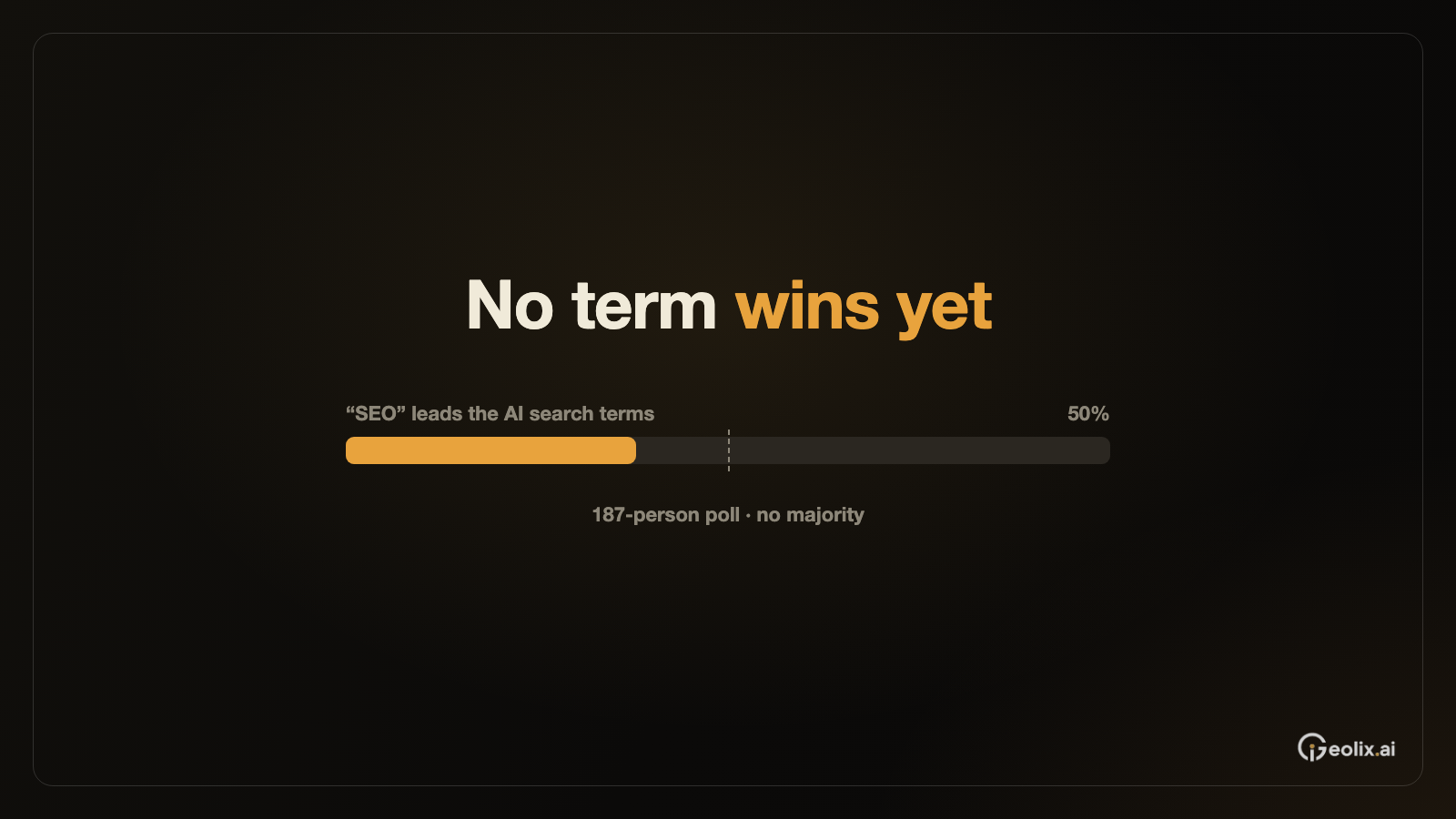

Key takeaway: Google is testing a small Search UI change, while a 187-person poll shows SEO leads but lacks a majority among AI search terms.
Key Takeaway
Google is testing the removal of the horizontal rule beneath the search tabs on its results page. The report describes this as a test, not a confirmed general rollout. Separately, a MRS Digital poll at brightonSEO found that SEO was the most popular single label for work related to AI-era search visibility, although it did not win a majority. Together, the reports give marketers two concrete issues to separate: a small Google Search interface change and the broader question of how teams describe SEO, GEO and AI search work.
What Google’s Search interface test changes
Search Engine Roundtable reported that Google is testing the removal of the HR, thematic break or horizontal line below the search tabs under the search box. The report showed versions both with and without the line and said the change is minor for most users. The available reporting does not establish that Google has changed rankings, Google Ads placement, AI search answers or organic search visibility.
SEO teams should therefore treat the visual test as a user-interface observation rather than evidence of a performance change. A practical check would record whether the rule appears on the same results page, whether the difference persists, and whether organic listings, advertising or other visible search features change at the same time. The report provides no traffic, click or ranking figures tied to the test.
What the AI search terminology poll measured
ContentGrip reported that MRS Digital collected 187 answers from visitors to its stand at brightonSEO on October 8 and 9. SEO received 80 votes, or 43%, followed by generative engine optimization, or GEO, with 36 votes and answer engine optimization, or AEO, with 28. AI SEO received nine votes, AI search received eight, AIO/AISO received three, and 23 respondents chose another option. The published results recorded 19 different names.
The result means SEO led as an individual label while 57% selected something else. It does not show that GEO or another acronym has replaced SEO. It also does not show that each label represents a separate customer journey or capability. For AI marketing teams, the more useful task is to define the intended outcome: conventional organic traffic, inclusion in AI-generated answers, accurate brand representation, or a combination. Google Search, Google’s AI experiences and conversational assistants should also be discussed separately because the reports do not establish that they offer identical visibility signals.
Method and Limitations
To assess the Google item, teams should keep a clear distinction between a test and a confirmed launch, compare the same Search interface with and without the horizontal rule, and avoid attributing any SEO result to the visual change without supporting data. To assess the terminology item, use the published base of 187 responses and the reported vote counts, while treating the sample as BrightonSEO stand visitors rather than a random sample of search professionals.
The public reports do not establish the Google test’s reach, duration or commercial effect. The poll cannot settle which term the wider marketing profession will adopt. It also cannot prove changes in rankings, advertising performance or AI-answer visibility. The supported conclusion is narrower: Google is testing a Search UI detail, while AI search terminology remains divided even though SEO leads among the individual choices.