

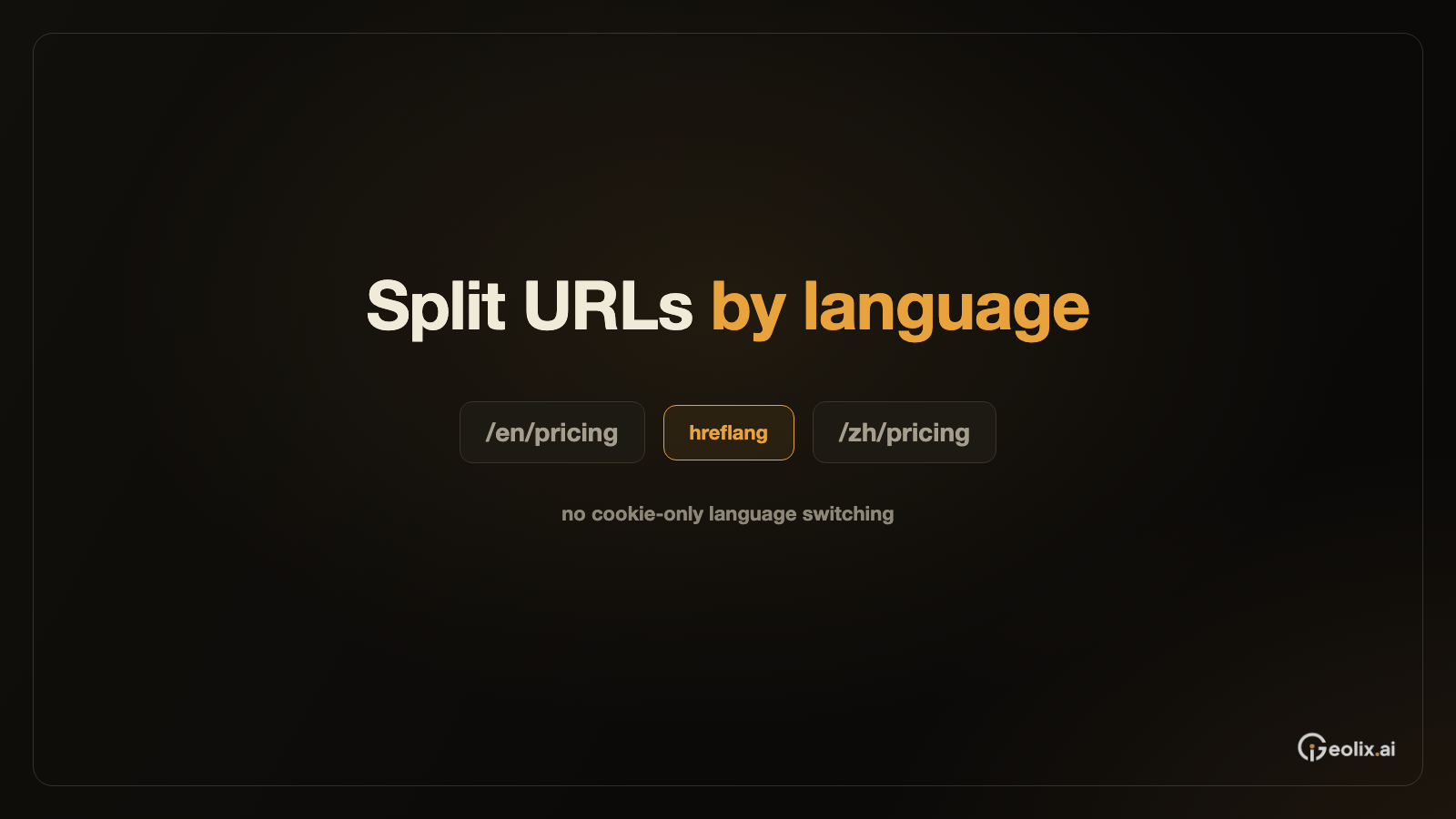

A language switch in the corner of a site does not establish that search systems can discover two separate versions. If switching changes browser state without a directly accessible language address, the company needs to inspect sharing, discovery, and maintenance behavior.
Google's multilingual-site guidance recommends separate URLs for language versions rather than relying only on cookies or browser settings. That is guidance on identifiable versions, not a ranking guarantee for a particular directory structure.
Give each language a stable URL
Copy a Chinese page's URL to another user. Does it still open in Chinese? Can a reader save the chosen language version? If the address never changes, establish what chooses the language and what a fresh visitor receives.
Repeatable access also helps editors. An English-market owner should be able to identify the page they maintain, and a Chinese-language editor should be able to verify theirs. Stable addresses reduce disagreements caused by different browser states.
Language and region are separate choices. English content can serve several markets, while two regional versions in the same language may need different service conditions. Decide which versions the business actually needs before creating a tidy but largely empty directory structure.
Describe alternate pages with hreflang
Google's localized-version documentation explains annotations such as hreflang for language and regional alternatives. The labels need to describe actual pages and relationships. Entering a language code does not complete localization.
Group corresponding pages and check whether they perform the same task. A detailed English product page and a Chinese homepage are not necessarily suitable counterparts merely because both load.
The translation also needs to cover the reader's task. Chinese navigation around an English-only explanation can contradict the expectation created by the language switch. That is a content review issue as well as a template issue.
Test language switches and page links
Check menu links, body links, and language switches after implementation. Confirm that each reaches the intended version and establish how factual changes in one version are reviewed in the others.
These are proposed publishing checks, not guarantees that Google will present a chosen page. The site should communicate its version relationships clearly and let a visitor who reaches either version find useful information.
If a product serves only certain markets, state those conditions on the relevant page. A language label cannot replace eligibility information. The purpose of multilingual URL planning is a maintainable relationship between material and the people it serves.
References
-
Google Search Central, “Managing multi-regional and multilingual sites”, for language URLs and regional planning.
-
Google Search Central, “Tell Google about localized versions of your page”, for language and region annotations.