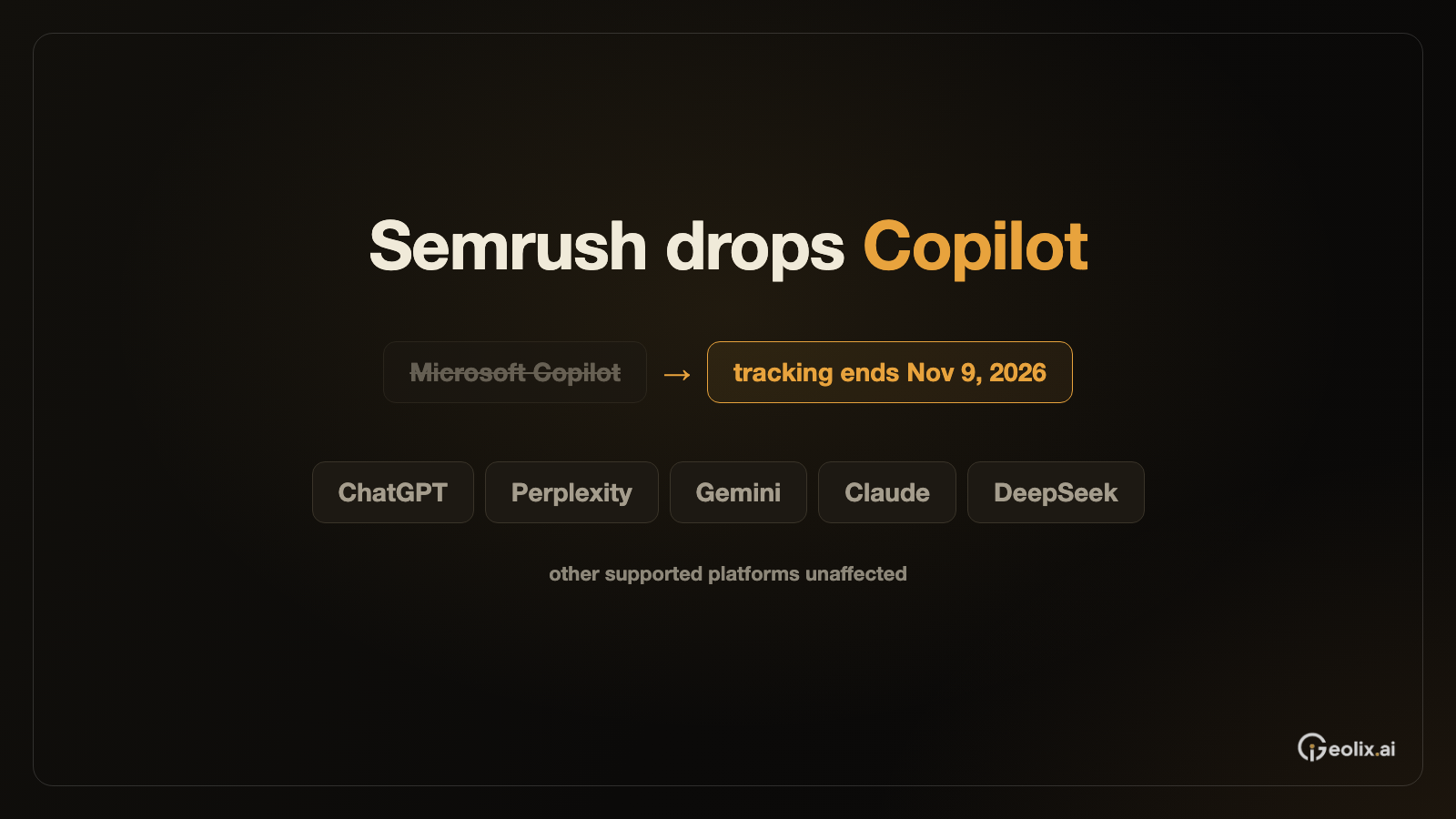

Key takeaway: Semrush will end Copilot tracking on November 9, while its notice says tracking on other supported AI platforms will remain unaffected.
Key Takeaway
Semrush has told Enterprise AIO customers that it will discontinue Microsoft Copilot tracking on November 9, 2026. The company says recent changes to Copilot’s access requirements prevent AI visibility platforms, including its own product, from collecting the data needed to measure performance. The notice says tracking on other supported AI platforms will remain unaffected.
The change narrows the view available to companies monitoring brand mentions and citations in Copilot. It does not represent an end to Semrush’s broader AI search or SEO visibility monitoring. The platforms listed for its AI Optimization product include Google AI Overview, Google AI Mode, ChatGPT, Perplexity, Grok, Gemini, Claude and DeepSeek. The source does not report a change to the tracking arrangements for those platforms and provides no Copilot-specific visibility figures.
Why Copilot Tracking Is Ending
Semrush does not identify one specific Microsoft change. Its customer notice refers broadly to recent Copilot access requirements and says those requirements prevent the collection of necessary data. Microsoft’s individual Copilot terms, effective August 18, 2026, require users to sign in with a Microsoft account and prohibit access through bots or scrapers. However, Semrush has not stated that a particular clause caused the tracking shutdown, so the public record does not establish a single confirmed cause.
Access also differs by Copilot entry point. The reported Microsoft statements distinguish Copilot Search inside ordinary Bing results, which can still be viewed without signing in, from direct access to copilot.microsoft.com or the Copilot button on Bing’s homepage, where users may receive a sign-in prompt. Edge profiles that are not signed in have also been reported to prompt users to log in before using Copilot. For SEO and AI marketing teams, those distinctions matter because a measurement run may not represent the same access conditions as a normal user session.
What Enterprise Customers Can Do With Prompts
Customers tracking Copilot prompts receive two options. They can return those prompts to their overall balance and use the capacity on platforms that Semrush still supports. Alternatively, they can keep historical Copilot data, while the prompts continue to count against the balance even though no new Copilot data will arrive after November 9. The notice does not identify a default choice or a deadline. Customers are directed to their Customer Success Manager for activation or questions.
The practical result for AI search visibility reporting is a platform-specific gap, not a simultaneous loss of all AI search data. Google AI Overview and Google AI Mode remain listed among the supported platforms, and Semrush says other supported tracking is unaffected. Teams comparing reports should mark the Copilot cutoff date and separate retained historical records from post-cutoff measurement.
Method and Limitations
Readers can verify the customer notice’s stated cutoff date, the two prompt-handling options and its statement about other supported platforms. They can also check Microsoft’s published account requirement, its automated-access language and the reported differences between Copilot entry points. The public material does not explain how Enterprise AIO collected Copilot responses or whether it used signed-in sessions. This report therefore confirms Semrush’s announced product change and the publicly described access conditions, without asserting that the sign-in rule is the only cause or predicting whether competing vendors will make the same decision.