OpenAI started testing a new ChatGPT ad unit called Sponsored Agents on September 16, and used the same announcement to push its advertising business deeper into the tools marketers already use, naming HubSpot as its first CRM partner and Shopify as its first ecommerce partner.
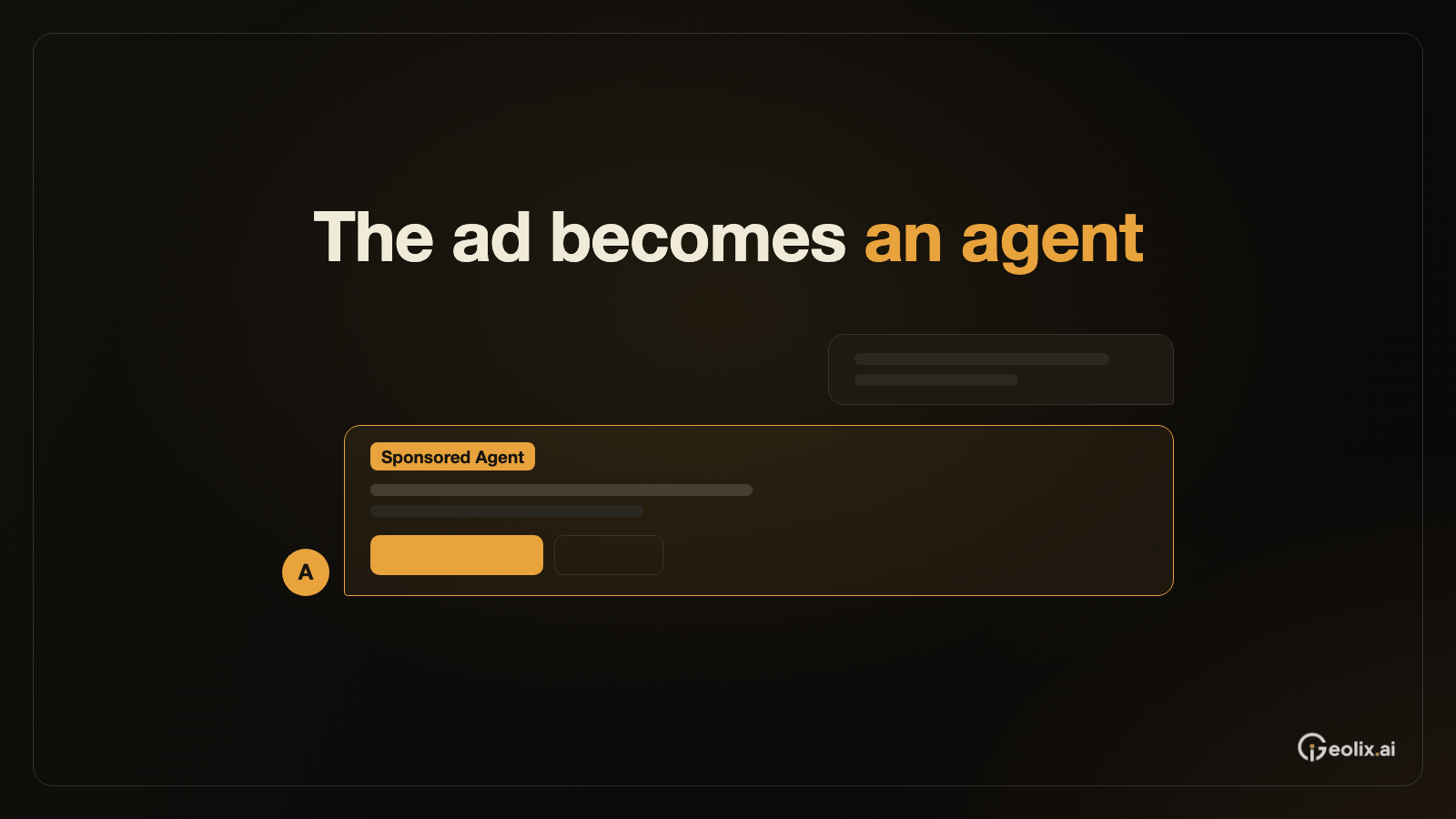
The format works like this. A user who sees a relevant ad in ChatGPT can choose to open a second conversation with an agent paid for by the advertiser. That thread carries a label identifying it as sponsored. Inside it, the user can describe what they need, ask follow-up questions about things like sizing or compatibility, and click through to the advertiser's site when they are ready. The test covers select advertisers in the United States, and Search Engine Land reports OpenAI is taking interest from businesses that want into future rounds.
OpenAI has drawn a firm line around the format. The company says a Sponsored Agent thread is distinct from ChatGPT's own answers and separate from whatever conversation the user was having before the ad appeared. That framing matters because of promises OpenAI made when it confirmed advertising in January: ads would not influence ChatGPT's answers, and advertisers would not see users' private conversations. Routing the sponsored exchange into a thread the user opens by choice keeps those commitments intact on paper.
The Register was less convinced by the same launch material. Its report notes that OpenAI's demo video shows a user asking for a recipe, then being directed to a subscription meal-kit ad whose sponsored agent recommends kits by preparation time. The publication compared the product with customer-service chatbots on brand websites, now placed inside ChatGPT. The thread carries a sponsorship label and remains separate from the original conversation, but it still serves an advertising purpose. "These launches reflect how we're building an advertising platform with AI at its center," OpenAI said in a statement quoted by The Register.
PPC Land catalogued what OpenAI has not said. The announcement is silent on pricing, on which model powers the agent, on who writes its instructions, and on what the advertiser learns from the transcript. It also creates a measurement gap: ChatGPT's entire ads stack reports on impressions and clicks, and a conversation is neither. PPC Land further noted that the advertiser email published by Search Engine Roundtable hedged more than the blog post, saying users "may be able to" start these conversations.
OpenAI also added AI-assisted campaign tools. Advertisers can build, edit and analyze campaigns through natural-language prompts using an Ads Manager plugin in ChatGPT, including ChatGPT Work. A drafting assistant proposes ad copy and images based on the landing page and objective. The advertiser email described that feature as still in testing, while the blog post presented it as rolling out, a discrepancy PPC Land flagged. An optional setting rewrites existing headlines and descriptions to fit the surrounding conversation and translates them into the user's language.
The integrations aim at businesses without media teams. HubSpot users can connect a ChatGPT Ads account and create ads, track results, and follow up on leads without leaving the CRM; HubSpot says weekly active users of its ChatGPT connector have grown 250 percent, without giving a base, and the two companies are dangling a bundle that includes a $750 ad-spend match for accounts opened by September 30. US Shopify merchants get a free ChatGPT Ads app, listed with OpenAI as developer and a September 3 release date, that syncs the product catalog, builds campaigns, and installs a Shopify server pixel; international availability starts September 23, per PPC Land.
The advertiser email carried four more changes: impression-billed conversion optimization is now generally available and recommended, attribution windows become configurable (7, 14, or 30 days for clicks; 0 or 1 day for views), platform targeting splits into five buckets, and a 1-to-10 Event Quality Score grades conversion setups.
PPC Land reports that the ads pilot opened February 9. Digiday put its annualized revenue run rate at $1 billion by late August, while Similarweb estimated that 26% of responses to Free and Go users carried a sponsored placement. None of those figures has been independently verified.
For brands tracking AI search visibility, paid placement in ChatGPT now extends from a card to an advertiser-controlled conversation, while OpenAI says organic answers remain unaffected. The Register's reading of the demo shows that users may not experience the boundary as clearly as OpenAI describes it. The HubSpot and Shopify integrations also put conversational ads within reach of smaller brands. Advertisers may test those placements against content-led visibility work, but OpenAI has not said how it will measure a sponsored conversation. That missing metric will shape whether budgets remain on the platform.