


Key takeaway: FTC filings detail alleged Amazon Ads surcharges, while Keytomic launches AI visibility tracking for separate SEO and AI search measurement.
Key Takeaway
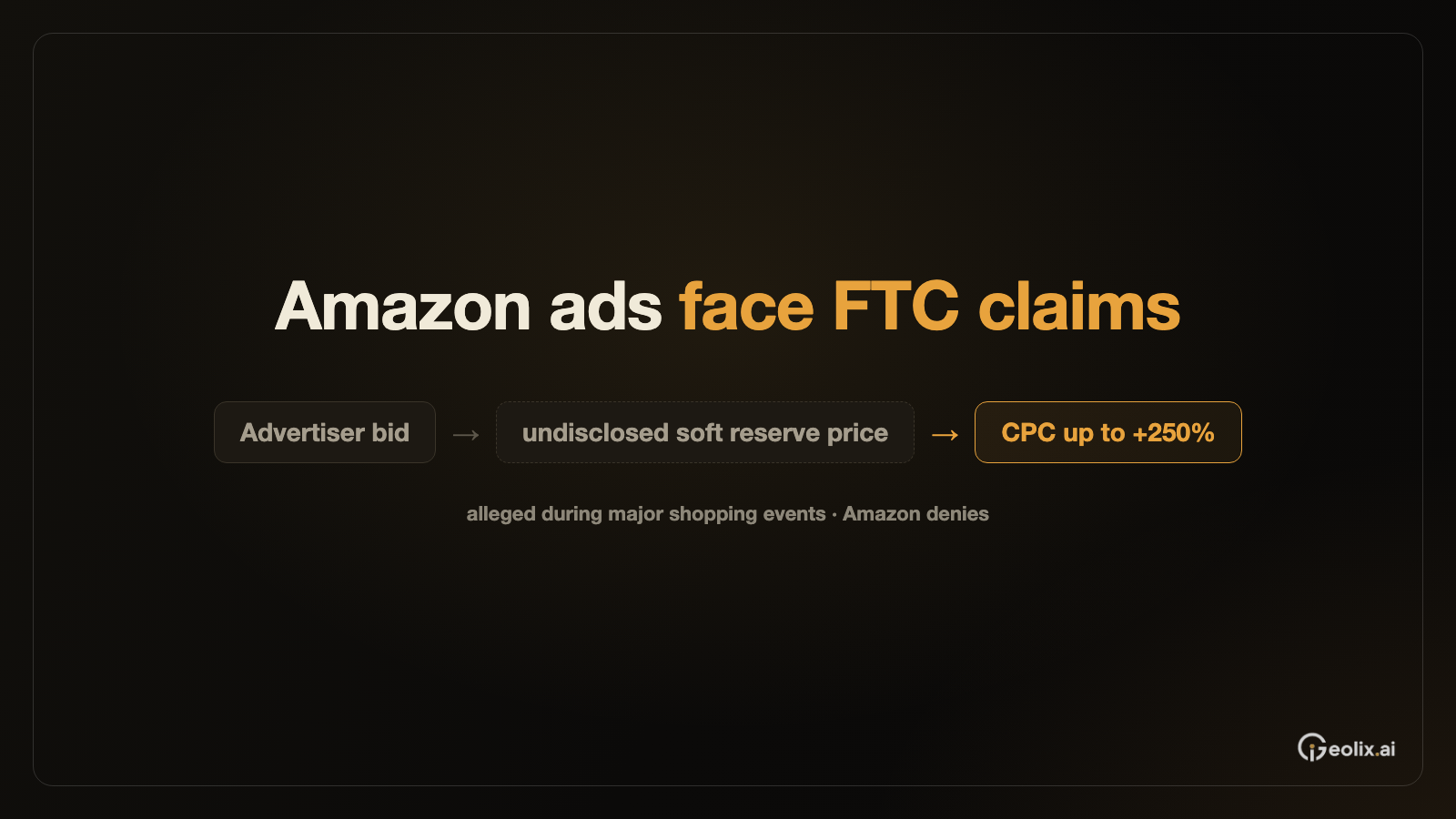
On November 5, the Federal Trade Commission (FTC) released previously redacted details from its lawsuit against Amazon. The updated complaint alleges that Amazon Ads used undisclosed “soft reserve prices” to raise advertisers’ final cost per click during parts of 2021 through 2023. Search Engine Journal reports alleged increases of up to 50% on ordinary days and up to 250% during major shopping events such as Prime Day and Black Friday. These remain allegations in federal litigation. Amazon has denied deceiving or harming advertisers and has said advertisers do not pay more than their maximum bids.
In a separate November 4 announcement, Keytomic introduced an MCP server, an AI Visibility Tracker, and a Reddit AI Agent for SEO automation. The release concerns organic search and AI search workflows, not Amazon’s advertising auction. Its tracker lets teams create custom prompts, monitor whether brands are mentioned by ChatGPT, Claude, Gemini, and Google AI Mode, and compare visibility over time and against competitors.
What the Amazon Ads allegations cover
The unsealed material describes examples from the 2021 holiday season, the 2022 holiday shopping season, and Prime Day 2023. The complaint alleges that Amazon increased average CPC by 20% during the 2021 holiday season, with some advertisers seeing increases above 200%. It also alleges that surcharges generated an additional $87 million in worldwide revenue during the 2022 holiday season. During Prime Day 2023, one large food and beverage advertiser allegedly faced price increases above 100%, with a related decline in return on ad spend.
Paid media teams reviewing historical performance can separate CPC, conversion rate, impression share, and ROAS for those periods. That may help identify unusually expensive shopping windows, but it does not establish that the allegations are proven or show whether the alleged practice continued after 2023.
How AI search tracking differs from paid search measurement
Keytomic’s announcement treats AI visibility as a separate measurement category from traditional Google rankings. Teams can use custom business-related prompts, record whether a model mentions a brand, and track mention frequency over time. The announcement does not provide customer cases, performance figures, or independent validation of the tracker’s results.
The company also says its MCP server can expose SEO functions inside Claude, ChatGPT, Cursor, Claude Code, OpenAI Codex, Gemini CLI, and Windsurf. Those functions include keyword research, publishing, audits, and content-calendar management. Its Reddit AI Agent scans relevant threads, identifies engagement opportunities, and drafts contextual replies; teams review and approve responses before publication. These are SEO and content operations, and should not be treated as evidence about Amazon Ads CPCs, auction mechanics, or paid-search returns.
Method and Limitations
To review Amazon Ads history, teams can group platform billing, auction or impression records, CPC, conversion rate, and ROAS by date and shopping event, then compare those periods with the dates described in the public complaint. Final campaign reports show what advertisers paid and what happened afterward, but they do not reveal how Amazon calculated each final CPC. The latest public material does not establish whether the alleged surcharges continued after 2023 or precisely which ad formats are covered by the newly unsealed sections. Earlier FTC materials referenced Sponsored Products, Sponsored Brands, and Display Ads, but the new announcement does not fully define the scope of the latest disclosures.
For AI search measurement, teams should preserve the prompt, platform, date, response, and brand-mention record, while keeping those results separate from Google rankings, organic clicks, and paid advertising data. Keytomic’s announcement does not show that higher AI visibility produces traffic, conversions, or advertising returns. The Amazon case also remains in litigation, so the disclosures are not a court finding that Amazon violated the law.